
Supporting Races at the St Leger Festival: Portland Handicap, Park Stakes, and More
 Available in US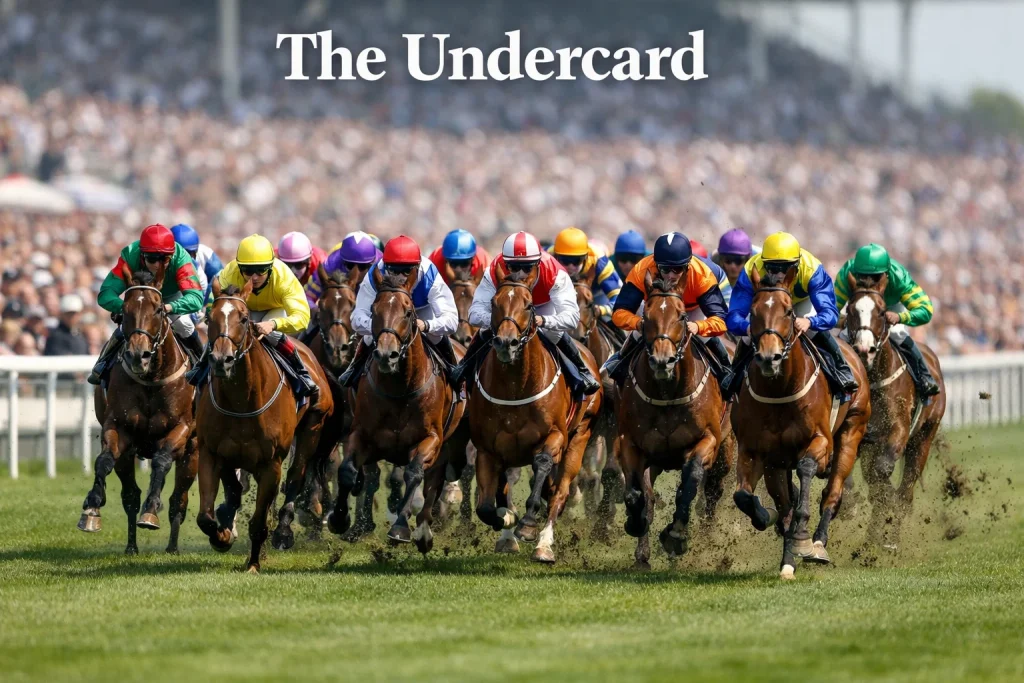
The St Leger is the headline act, but the four-day festival at Doncaster stages a full undercard of Group races, heritage handicaps, and competitive stakes that offer serious betting action beyond the main event. For punters who travel to Doncaster — or who follow the festival remotely — the supporting programme is where the volume of betting opportunities lives. The St Leger is one race on one afternoon. The undercard is twenty-plus races across four days.
This guide covers three of the most notable supporting races: the Portland Handicap, the Park Stakes, and the Champagne Stakes. Each has its own character, its own betting dynamics, and its own place in the festival’s identity.
The Portland Handicap: Sprint Action on St Leger Day
The Portland Handicap is a heritage sprint, typically run over five furlongs and six yards on St Leger Saturday. It is one of the oldest handicaps in the British flat calendar and regularly attracts fields of fifteen to twenty runners — a stark contrast to the seven or eight that contest the St Leger itself.
For punters, the Portland offers a completely different betting proposition from the main race. Large-field sprint handicaps are inherently volatile. The draw can play a significant role over five furlongs at Doncaster, particularly when the ground is on the softer side and the stands’ rail becomes an advantage. Form from similar conditions at York, Haydock, and Ascot translates reasonably well, but handicap form is always less reliable than Group race form — the ratings are compressed, and small differences in weight and fitness can produce outsized results.
The typical Portland winner is a horse rated in the mid-90s to low-100s, carrying between 8st 7lb and 9st 4lb, with proven five-furlong form on the prevailing ground. Horses drawn high (towards the stands’ rail) have a slight historical advantage, though this varies with conditions. The race is fast, noisy, and over in less than sixty seconds — a jolt of adrenaline sandwiched between the longer, more strategic races on the card.
Betting angles include studying the stable form of trainers who target sprint handicaps specifically — Richard Fahey, Karl Burke, and David O’Meara are perennial names in races of this type — and monitoring the market for late support on runners whose connections have opted for first-time headgear or a change in tactics. The Portland is a race where inside information, such as it exists within the rules, tends to find expression in the market late on.
Each-way terms in the Portland are significantly more generous than in the St Leger itself. With sixteen or more runners, bookmakers typically pay four places at one-fifth of the odds — compared to three places at one-quarter in the Leger’s smaller field. That makes the Portland an ideal each-way race for punters who want to spread their risk across the card. A £5 each-way bet at 14/1 in a twenty-runner handicap has a different risk profile from the same stake at 5/1 in a seven-runner Classic, and both can coexist on the same afternoon.
The Park Stakes: A Group 2 Test for Sprinters
The Park Stakes is a Group 2 contest run over seven furlongs on the Thursday or Friday of the festival. It sits above the Portland in quality — the runners are pattern-class horses, the field is smaller (typically eight to twelve), and the form is more readable because the runners have established records at Group level.
Seven furlongs at Doncaster is a sharp test. The start is on the straight course, and there is no bend to negotiate — the entire race unfolds in a direct line towards the stands. This layout favours horses with tactical speed and the ability to sustain their effort through the final furlong without the respite that a turn provides.
The Park Stakes often features horses on their way to or from major autumn targets: the Sprint Cup at Haydock, the Sun Chariot Stakes at Newmarket, or the QEII at Ascot on Champions Day. Runners who perform well here but finish second or third are often value bets in their next start, because the market tends to overreact to defeat in a competitive Group 2 and undervalue the form when the horse returns to a slightly easier assignment.
For the St Leger Festival, the Park Stakes provides a quality benchmark for the meeting’s undercard. A strong renewal with recognisable names confirms that the festival is attracting competitive entries beyond the Leger itself — a sign of the programme’s depth and the prize money that supports it.
From a punting perspective, the Park Stakes market tends to be well-formed by post time. The runners are established Group horses with known form, and the market rarely throws up a complete surprise. The value, if it exists, usually comes from a horse who has been campaigned at a lower level (Group 3 or listed) and is stepping up in class at Doncaster. A progressive horse with strong speed figures from a lesser race can sometimes outrun its Park Stakes price, because the market gives insufficient credit to upward trajectory.
The Champagne Stakes: Spotting Future Classic Contenders
The Champagne Stakes is a Group 2 race for two-year-olds, run over seven furlongs on St Leger Saturday. It is one of the most forward-looking races on the festival card — a window into the following year’s Classic generation rather than a retrospective on the current one.
Winners of the Champagne Stakes have gone on to contest the 2000 Guineas, the Derby, and — occasionally — the St Leger itself the following year. The race is a proven talent identifier, and trainers who run their best juvenile at Doncaster are typically signalling serious Classic ambitions for the next season. For punters with a long-term approach, noting the Champagne Stakes winner and monitoring its ante-post prices for the following year’s Classics is a legitimate strategy.
Doncaster Racecourse will host 35 fixture days in 2026 as part of the 250th anniversary Festival of the Flat programme — a schedule that gives the Champagne Stakes an enhanced context within a year of celebration. The supporting card on St Leger Saturday is designed to complement the main race rather than compete with it, and the Champagne Stakes achieves this by looking forward while the Leger looks back on 250 years of history.
David Armstrong, Chief Executive of the Racecourse Association, has described horse racing as a unique combination of elite sport and a social event — an observation that applies to the St Leger Festival undercard as much as to the headline race. The supporting races are where much of the festival’s daily betting volume is generated, where the atmosphere builds across the card, and where the racing itself often produces the most thrilling finishes. St Leger Festival attendance grew 4.7% in 2025, according to RCA data, and the undercard’s quality is a significant part of what draws the crowd back year after year.
