
The World's Oldest Classic Races: Where the St Leger Sits in Racing History
 Available in US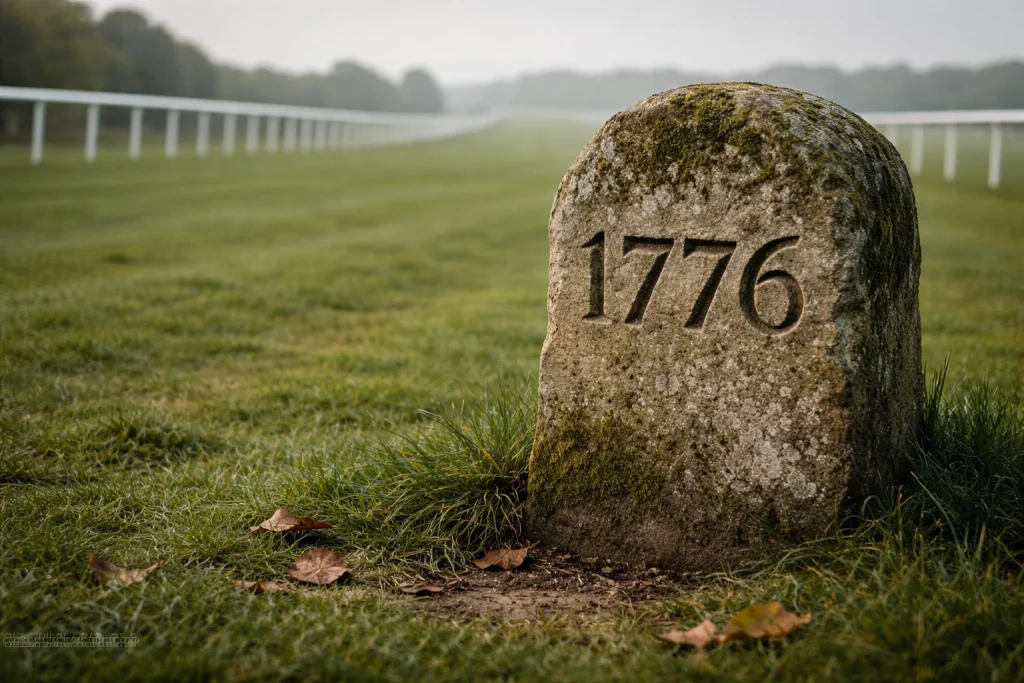
The St Leger was first run in 1776. The Oaks followed in 1779. The Derby in 1780. The 2000 Guineas in 1809, and the 1000 Guineas in 1814. That chronology places the St Leger as the oldest of the five British Classics — and one of the oldest continuously staged horse races anywhere in the world.
Being first is not the same as being most famous. The Derby has long held the greater public profile, and races like the Kentucky Derby and the Melbourne Cup command larger global audiences. But age confers something that no marketing budget can replicate: an unbroken link to the origins of the sport. The St Leger connects the horse racing of 2026 directly to the horse racing of the Georgian era, and that continuity shapes the race’s identity, its rituals, and its place in the broader story of Thoroughbred competition.
A Timeline: When Each British Classic Was Established
The five British Classics were established across a forty-year period at the end of the eighteenth century and the beginning of the nineteenth. Each emerged from the culture of aristocratic wagering that defined English horse racing in that era — private matches between wealthy owners, gradually formalised into public races with rules, conditions, and prize money.
The St Leger came first, in 1776, organised by Colonel Anthony St Leger near Cantley Common in Doncaster. The race was initially unnamed; it received the title “St Leger” two years later, in 1778, after its founder. It moved to Town Moor shortly afterwards, where it has been run ever since — the same stretch of South Yorkshire ground hosting the world’s oldest Classic for a quarter of a millennium.
The Oaks, named after the estate of the 12th Earl of Derby, was established at Epsom in 1779 for three-year-old fillies over one mile and a half. The Derby itself followed a year later, in 1780, using the same distance for colts and fillies. Legend holds that the Earl of Derby and Sir Charles Bunbury flipped a coin to decide whether the race would carry Derby’s name or Bunbury’s; Bunbury lost the toss but won the inaugural race with Diomed.
The 2000 Guineas arrived at Newmarket in 1809, testing three-year-olds over a mile — a distance that prioritised speed over stamina and created a new category within the Classic programme. The 1000 Guineas, for fillies only, completed the quintet in 1814. Together, the five races established the framework that defines British flat racing to this day: a series of tests at different distances, for different ages and sexes, that collectively identify the best Thoroughbreds of each generation.
The St Leger’s position as the oldest gives it a structural distinction that no other Classic can claim. It was the template — the proof of concept — that the others followed. Without the St Leger demonstrating that a formalised, annual race for three-year-olds could attract public interest and sustained investment, the Derby and the Oaks might have taken a different form, or arrived later, or not arrived at all.
Beyond Britain: Classic Races Around the World
Britain’s five Classics inspired equivalent races across the globe, though the definition of “Classic” varies by country and by era. The most significant international comparisons provide context for the St Leger’s longevity.
The Prix du Jockey Club, France’s equivalent of the Derby, was first run in 1836 — sixty years after the St Leger. The Irish Derby began in 1866. The Kentucky Derby, the centrepiece of American racing, dates from 1875. The Melbourne Cup, Australia’s most famous race, has been run since 1861 but is a handicap rather than a weight-for-age Classic.
Japan’s Classic programme, modelled directly on the British system, was established in the early twentieth century. The Japanese Derby (Tokyo Yushun) has been run since 1932, and the Japanese St Leger (Kikuka Sho) since 1938 — both consciously patterned after their British namesakes.
The global horse racing market was valued at $471.3 billion in 2024, according to Deep Market Insights, with a projected increase to $530.2 billion by 2030. Within that enormous figure, the Classic races of each nation represent a tiny fraction of the total turnover but an outsized share of the cultural and commercial significance. Classic winners become stallions and broodmares whose bloodlines shape the breed for decades. The St Leger, as the original Classic, sits at the root of that global tree.
The international comparison also highlights why the St Leger’s future is not guaranteed by its past. Racing’s centre of gravity has shifted: prize money in the Middle East, Japan, and Australia now dwarfs what British races can offer, and the best bloodstock increasingly flows towards the richest prizes. The St Leger’s endurance depends on its ability to remain relevant — through competitive fields, attractive prize money, and a betting market that rewards engagement — rather than on the assumption that history alone will sustain it.
Why Being First Still Matters: The Leger’s Enduring Legacy
The 250th running of the St Leger in 2026 is not just a milestone — it is a statement of survival. Very few sporting events of any kind have been staged continuously for a quarter of a millennium. The race has outlasted empires, survived two world wars (running at alternative venues during both), adapted to the professionalisation and commercialisation of sport, and maintained its Group 1 status through an era when many traditional staying races have been downgraded or abandoned.
Rachel Harwood, Executive Director of Doncaster Racecourse, has described 2026 as a Festival of the Flat — a season-long celebration centred on 35 fixture days, with the 250th St Leger as its centrepiece. That programme reflects Doncaster’s understanding that the anniversary carries commercial and cultural weight that extends beyond a single Saturday in September.
For punters, the legacy is more practical than sentimental. The St Leger’s age means it has the deepest results archive of any flat race in Britain — 249 data points across which patterns, trends, and form indicators can be tested. The historical record shows which types of horse win, which trainers dominate, and how the market prices the favourite. That data is the foundation of every betting strategy discussed on this site, and it exists because the St Leger has been running, unbroken, since the year the American colonies declared independence.
Being the oldest Classic does not make the St Leger the richest, the most famous, or the most-watched. It makes it the most rooted — a race with a connection to the origins of the sport that no other event can claim. In 2026, that connection will be 250 years deep, and every bet placed on the race will carry the weight of that history, whether the punter knows it or not.
