
St Leger Day at Doncaster: What to Expect on the Festival's Flagship Saturday
Best Horse Racing Betting Sites – Bet on Horse Racing in 2026
Loading...
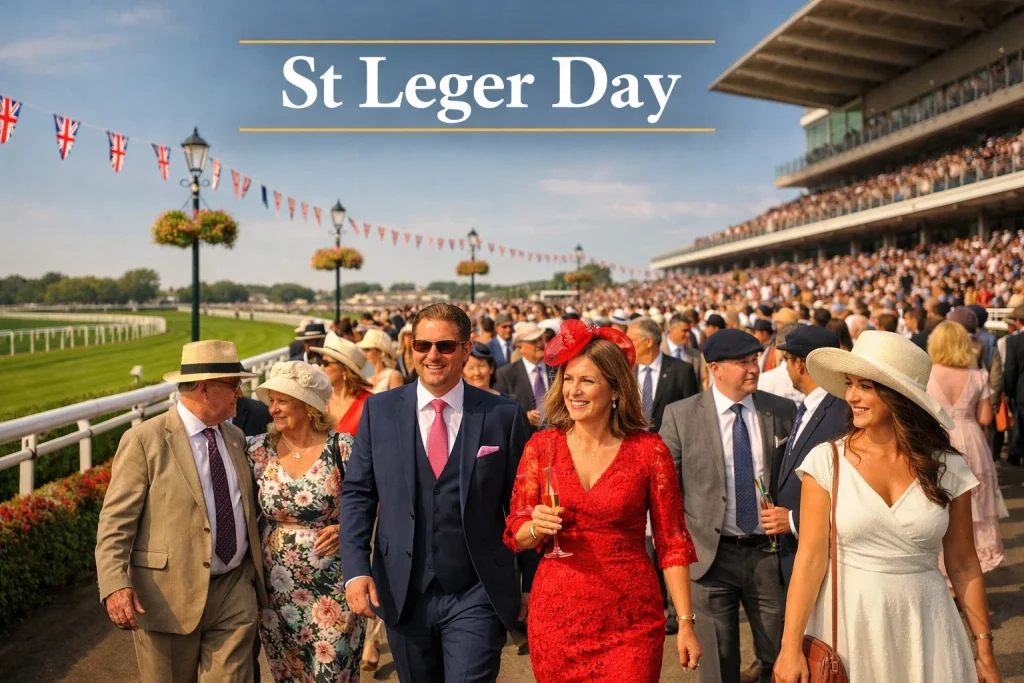
St Leger Day is the Saturday climax of the four-day St Leger Festival at Doncaster. It is the day the world’s oldest Classic is run, the day the largest crowds arrive, and the day that defines the entire festival week. In 2025, more than 26,000 people came through the gates on St Leger Day alone — an 11% increase on the previous year — and the 250th running in 2026 will almost certainly push that number higher.
Whether you are travelling to Doncaster for the racing, the atmosphere, or both, knowing what the day looks like from first race to last helps you plan your time, your money, and your bets. The Saturday card is the strongest of the four days, the enclosures offer different experiences at different price points, and the entertainment extends well beyond the final furlong. Here is what to expect.
The Saturday Programme: From the First Race to the Last
Gates typically open mid-morning, with the first race on the card scheduled for early afternoon. The exact times vary from year to year, but the Saturday programme generally features six or seven races spread across the afternoon, with the St Leger itself occupying the headline slot — usually the fifth or sixth race on the card, timed for maximum television coverage and on-course atmosphere.
The supporting races are not filler. St Leger Day’s undercard often includes competitive handicaps and listed stakes that draw strong fields in their own right. For punters, that means a full afternoon of betting opportunities beyond the big race. The Portland Handicap, if scheduled on the Saturday card, is a six-furlong sprint that attracts large fields and volatile betting markets — a sharp contrast to the stamina test that follows.
The St Leger itself is typically run between 3:00pm and 3:45pm. The build-up starts earlier: the parade ring fills with connections and racegoers from about thirty minutes before post time, the pre-race analysis hits the big screens, and the atmosphere in the stands builds perceptibly as the runners head to the start. If you plan to bet on-course, get to the betting ring at least twenty minutes before the off — the queues at the bookmakers’ pitches thicken rapidly once the runners are announced.
The race itself lasts around three minutes — long by flat racing standards — and the Town Moor straight gives spectators an extended view of the finish. From the grandstand, you can see the field sweeping around the final bend and into the home straight, with nearly five furlongs of racing still to unfold. It is one of the most visually dramatic finishes in British flat racing, and the length of the straight means the crowd has time to react, shout, and cheer as the result takes shape in front of them.
After the Leger, there are usually one or two more races to close the card. The post-racing programme varies, but Doncaster has increasingly offered live music and entertainment into the evening, turning St Leger Saturday from an afternoon at the races into a full day out. Plan to stay beyond the last race if you can — the atmosphere loosens, and the 26,000-strong crowd settles into a different gear.
Enclosures and Where to Watch: County, Grandstand, and Lawn
Doncaster Racecourse operates three main enclosures on St Leger Day, each offering a different experience and a different price point.
The County Enclosure is the premium option. It offers the closest views of the parade ring, access to the members’ lawn, and the best sightlines of the home straight from the upper levels of the grandstand. A dress code applies — smart attire is expected, and entry can be refused for those who do not meet the standard. County tickets for St Leger Day in 2025 were priced at around £61, and the enclosure tends to attract a mix of serious racegoers, corporate hospitality guests, and anyone who wants the best available view of the action.
The Grandstand Enclosure occupies the middle ground. It provides good views of the track from multiple levels, access to a range of food and drink outlets, and proximity to the on-course bookmakers in the betting ring. The atmosphere here is more relaxed than the County, with no formal dress code beyond a general expectation of smart-casual attire. For punters who want to study the parade ring and place bets with on-course layers, the Grandstand is arguably the most practical choice.
The Lawn Enclosure is the most affordable option, typically priced around £41 for General Admission. It offers standing and seating areas along the course with clear views of the racing, plus access to food stalls, bars, and big-screen coverage. The dress code is relaxed, and the atmosphere is more informal — families, groups of friends, and first-time racegoers tend to gravitate here. If you are coming primarily for the experience rather than the fine detail of the racing, the Lawn delivers excellent value.
Whichever enclosure you choose, arrive early on St Leger Day. With 26,000 people expected, the most popular viewing spots fill up quickly, and the queues for food and drink peak in the hour before the big race. Securing your position by mid-afternoon ensures you can watch the Leger from where you want to be, not from wherever you can fit.
Beyond the Track: Entertainment, Food, and Atmosphere
The St Leger Festival has evolved into something broader than a horse racing meeting. Doncaster Racecourse has invested in entertainment, food, and atmosphere as part of a deliberate strategy to attract audiences beyond the traditional racing demographic. BHA data shows that 68% of ticket buyers at British racecourses are casual or first-time visitors, and St Leger Day reflects that — the crowd is a mix of lifelong racegoers, betting enthusiasts, and people who are simply looking for a day out in September.
Food options across the course have improved significantly in recent years. Beyond the standard racecourse catering, St Leger Day typically features street food stalls, pop-up bars, and regional vendors. Expect everything from hog roast to artisan burgers to Asian fusion, depending on the year’s lineup. The quality varies by stall, but the choice is genuine — this is no longer a one-sandwich-fits-all operation.
Post-racing entertainment on Saturday usually includes live music or a DJ set. Doncaster has hosted well-known acts on the main stage after the final race, turning the course into an open-air venue as the afternoon transitions into evening. The entertainment programme for the 2026 250th anniversary edition has not yet been confirmed, but the milestone will almost certainly prompt something special.
For those who prefer their entertainment on-course, the parade ring and betting ring are attractions in themselves. Watching the horses being saddled up before each race, assessing their condition and demeanour, and then walking to the bookmakers to back your selection is a ritual that has been part of British racing for generations. It is a slower, more deliberate form of engagement than tapping a phone screen, and on St Leger Day — with the oldest Classic about to be run — it carries a particular weight.