
St Leger Festival 2026: Tickets, Schedule and the 250th Anniversary Programme
Best Horse Racing Betting Sites – Bet on Horse Racing in 2026
Loading...
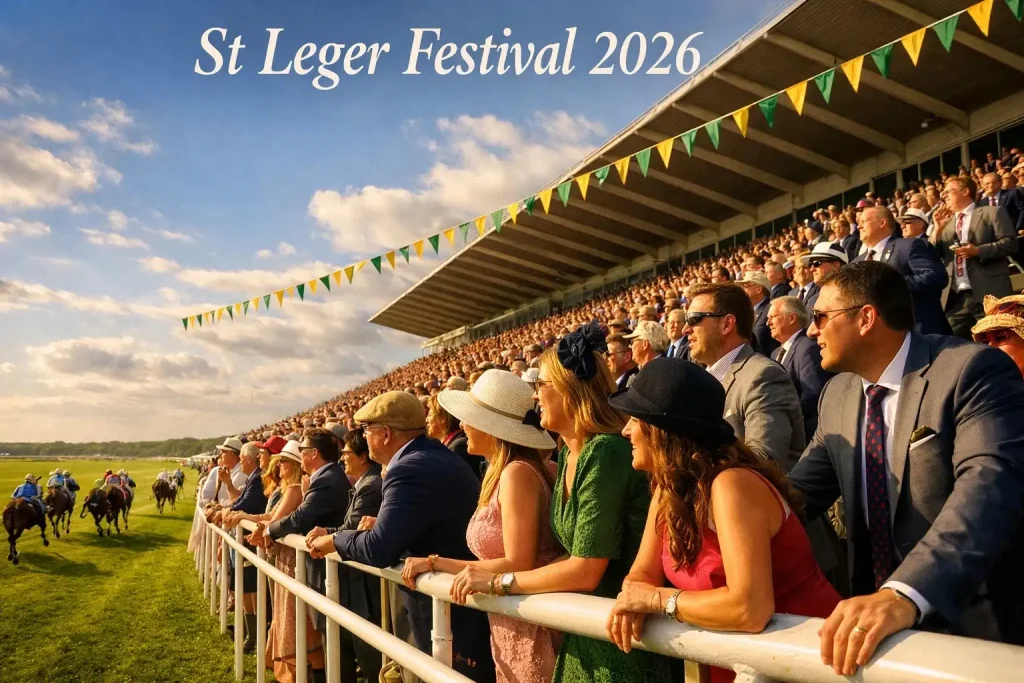
The St Leger Festival 2026 is not just another four days of racing at Doncaster. It is the 250th anniversary of the world’s oldest Classic, and the racecourse is treating it accordingly. Under the banner of the “Festival of the Flat,” Doncaster has built its entire 2026 season around the milestone, with thirty-five fixture days leading up to the main event in September. For anyone planning to attend — whether as a seasoned racegoer or a first-time visitor — the scale of the occasion changes the calculation. Bigger crowds, a fuller programme, and a level of media and industry attention that the Leger Festival has not received in decades. This is the centrepiece of the Doncaster racing year, in the year when the centrepiece carries more weight than at any point since the race was founded.
This is Doncaster’s biggest September since 1776, and the racecourse knows it. The 2025 festival already showed what the venue is capable of, with St Leger Day alone attracting over 26,000 spectators — an 11 per cent increase on the previous year. The 250th anniversary will aim to surpass that, with expanded hospitality, enhanced entertainment, and a pricing strategy designed to mark the occasion in the most literal way possible. What follows is a practical guide to the 2026 festival: what is happening, when it is happening, what it costs, what to wear, and how to get there.
Festival of the Flat: What Doncaster Has Planned for 2026
Doncaster Racecourse has branded 2026 as the year of the “Festival of the Flat” — a season-long celebration anchored by thirty-five fixture days across the flat racing calendar. The concept extends well beyond the September festival itself. From the first spring meetings through the summer to the Leger in the autumn, Doncaster is positioning every race day as part of a connected programme marking 250 years since Anthony St Leger organised a sweepstake on Cantley Common.
“2026 is about celebrating our multi-century sporting heritage, with the 250th St Leger at the heart of a season-long Festival of the Flat” — Rachel Harwood, Executive Director, Doncaster Racecourse. Harwood’s framing is deliberate. The racecourse is not simply adding bunting to its existing programme. It is building a narrative that positions the September festival as the climax of a year-long story, with the St Leger Stakes as the final chapter.
The practical implications for the festival itself are significant. Doncaster is expanding its hospitality offering for 2026, with additional packages in the premium enclosures designed to cater for corporate groups, private parties, and visitors who want the full day-out experience rather than a quick afternoon at the races. The racecourse is also investing in its general admission areas, recognising that the anniversary will attract a larger-than-usual proportion of casual and first-time visitors. In 2025, according to data from the BHA, 68 per cent of ticket buyers at British racecourses were classified as casual or first-time attendees — a figure that suggests the St Leger’s audience in 2026 will include many people who have never been to a race meeting before.
The festival’s heritage programming is designed with exactly that audience in mind. Exhibitions tracing the race’s history from 1776 to the present, displays of historical memorabilia, and guided elements within the racecourse grounds will give newcomers a reason to engage with the St Leger beyond the betting ring. For regular racegoers, the draw is simpler: this is a one-off occasion, a milestone that will not come around again, and the quality of the racing programme — headlined by the 250th St Leger — should reflect that status.
The broader attendance trend gives Doncaster reason to be confident. The Racecourse Association’s Q3 2025 report recorded a 4.7 per cent increase in attendance at the St Leger Festival compared to the previous year, and the BHA’s annual figures showed that overall British racing attendance crossed five million for the first time since 2019. The St Leger Festival is not swimming against the tide — it is riding a wave that the 250th anniversary will amplify further.
Part of that wave is the work being done to attract younger audiences. According to the Racecourse Association’s Q3 2025 data, Great British Racing’s “The Going Is Good” campaign drove a 60 per cent increase in web traffic to racecourse websites in 2025, and the number of millennial visitors (aged 29 to 44) doubled compared to the previous year. Doncaster’s 250th celebrations are positioned to capture exactly this momentum — offering an event that combines heritage, social atmosphere, and sporting quality in a way that few other fixtures in the British calendar can match.
Day by Day: The St Leger Festival Schedule
The St Leger Festival runs over four days, typically from Wednesday to Saturday in the second week of September. Each day has its own character, its own feature races, and its own atmosphere. Understanding the daily schedule helps you decide which day — or days — to attend, and how to structure your time once you are there.
Wednesday is the opening day, traditionally the quietest of the four in terms of crowd size but often the best for serious racegoers who want to study form and enjoy the course without the Saturday-level congestion. The feature race is typically a Listed or Group 3 contest, and the supporting card includes competitive handicaps that draw good fields and offer interesting betting opportunities. For visitors who plan to attend more than one day, Wednesday is worth considering as a gentle introduction to the festival before the intensity builds.
Thursday brings Ladies Day — the festival’s most socially prominent occasion and, for many attendees, the main event. The racing is strong, with the Park Hill Stakes (a Group 2 contest for fillies and mares over the St Leger trip) as the centrepiece, but the atmosphere on Ladies Day is driven as much by the fashion competition and social energy as by the sport itself. Dress standards are at their highest on Thursday, and the enclosures fill earlier than on any other day of the festival. If you plan to attend Ladies Day, arriving early is not optional — it is the price of a good viewing position and a seat in the dining areas.
Friday is feature race day, headlined by the Champagne Stakes — a Group 2 event for two-year-olds that often features future Classic contenders making their mark over seven furlongs. The Portland Handicap, a heritage sprint, also sits on Friday’s card and attracts large, competitive fields that make it one of the best betting races of the week. For punters, Friday often represents the strongest overall card of the festival, with a mix of Group-race quality and handicap depth that gives every type of bettor something to work with.
Saturday is St Leger Day — the flagship of the festival and the reason the entire week exists. The 250th St Leger Stakes will be run in the afternoon as the centrepiece of a card that typically includes two or three other Group-level races alongside competitive handicaps. The crowd on Saturday is the largest of the week: in 2025, more than 26,000 people attended St Leger Day, and the 250th anniversary in 2026 is expected to push that figure higher. The atmosphere is a blend of sporting intensity and end-of-festival celebration, with the bars and entertainment areas remaining open into the evening after the final race. It is, by some distance, the biggest day of the racing year at Doncaster, and for the 250th renewal, it will carry a weight of occasion that very few sporting events in Britain can match.
Beyond the racing itself, each day of the festival features live entertainment, music, and social programming that continues after the last race. Doncaster has invested increasingly in its post-racing offering in recent years, recognising that many visitors — particularly on Ladies Day and St Leger Day — treat the festival as an all-day social event rather than a strictly sporting occasion. Live music acts, DJs, and themed bars have become standard features of the festival programme, and the 250th anniversary is expected to see an expanded entertainment schedule across all four days. For visitors deciding which day to attend, it is worth checking the Doncaster Racecourse website closer to the event for confirmed entertainment lineups, as these are typically announced in the summer.
A final note on timing within each day. Gates typically open between 10:30 and 11:00, with the first race around 13:30 and the last around 17:30, depending on the card. Arriving at opening time gives you the best choice of viewing positions and the chance to walk the course, study the parade ring at your own pace, and settle in before the crowds peak. On St Leger Day in particular, the enclosures are noticeably busier by early afternoon, and latecomers can find the best spots in front of the grandstand already taken.
Tickets and Hospitality: Prices, Enclosures, and the 17.76% Deal
Doncaster Racecourse operates a tiered pricing structure for the St Leger Festival, with costs varying by enclosure, day, and how far in advance you book. The headline ticket categories for 2026 are General Admission and County Enclosure, with hospitality packages available on top.
General Admission is the entry-level option and provides access to the public viewing areas, bars, and betting facilities. Prices for St Leger Day 2025 started at approximately £41 per person when booked in advance. The County Enclosure, which offers closer proximity to the parade ring, dedicated bars, and a slightly more formal atmosphere, was priced at around £61 for advance bookings. For racegoers planning to attend multiple days, a four-day festival pass was available at approximately £75 — significantly cheaper than buying individual day tickets and well worth considering if you want to experience the full arc of the festival from Wednesday’s opening card to Saturday’s Leger.
The standout pricing detail for 2026 is the anniversary discount. In a nod to the race’s founding year, Doncaster is offering a 17.76 per cent reduction on St Leger Festival 2026 tickets — a promotion that references 1776 and rewards early bookers simultaneously. The discount applies to advance purchases and is likely to be available for a limited period, so anyone planning to attend should check the racecourse website sooner rather than later. It is a clever piece of marketing that makes the 250th anniversary tangible in the most direct way possible: in the price you pay at the gate.
Hospitality packages operate on a different scale entirely. Doncaster offers private box hire, restaurant dining, and bespoke event packages for groups ranging from intimate parties of six to corporate bookings of fifty or more. Prices for these packages vary significantly depending on the day, the enclosure, and the level of service, and they are typically booked months in advance for St Leger Day. For the 250th anniversary, demand for premium hospitality is expected to be higher than in any recent year, and the racecourse has signalled that it is expanding its corporate offering to accommodate the interest.
A practical note on booking. Doncaster releases its ticket prices in stages, with early-bird offers typically available from spring onwards. The 17.76 per cent anniversary discount is an additional incentive to book early, and advance tickets are almost always cheaper than buying at the gate on the day. For St Leger Day specifically, advance booking is strongly recommended — the 2025 attendance of over 26,000 means that walk-up availability on the day is not guaranteed, particularly in the County Enclosure and hospitality areas.
It is also worth noting that Doncaster, like many British racecourses, admits accompanied under-18s free of charge in most enclosures. The BHA reported that attendance by under-18s at British racing grew by 17 per cent in 2025, reaching over 211,000 across the season, which reflects a broader push to make race meetings more accessible to families. The St Leger Festival accommodates younger visitors, though the atmosphere — particularly on Ladies Day and St Leger Day — is primarily adult-oriented, with bars and betting facilities forming the core of the social experience. Parents planning to bring children should check the racecourse’s published guidance on age-appropriate areas and facilities before booking.
What to Wear: Dress Code by Enclosure
The dress code at the St Leger Festival varies by enclosure, and getting it right matters — not because the racecourse is excessively formal, but because turning up in the wrong gear can mean being refused entry to certain areas or feeling conspicuously underdressed in a crowd that has made an effort.
General Admission has the most relaxed standards. Smart casual is the baseline: collared shirts, chinos, or smart jeans for men; dresses, skirts, or tailored trousers for women. Sportswear, shorts, and flip-flops are not permitted. The atmosphere in the general areas is sociable and accessible, and most visitors will find that a step above weekend-pub attire is sufficient.
The County Enclosure demands a higher standard. For men, a jacket and tie are expected, though not always strictly enforced outside of Ladies Day. For women, the expectation is race-day formal: dresses or tailored two-pieces, with hats or fascinators encouraged though not mandatory on most days. On Ladies Day specifically — Thursday of the festival — the dress code in the County Enclosure is at its most rigorous, with fashion competitions and style awards adding an element of public scrutiny that makes preparation worthwhile.
Hospitality and private boxes generally follow the County Enclosure standards, though individual packages may specify their own guidelines. If you have booked a corporate or group package, the booking confirmation will include dress code details specific to your enclosure and day.
The practical advice is straightforward. Check the racecourse’s published dress code on the Doncaster Racecourse website before you book, and err on the side of smartness rather than casualness. September weather at Doncaster can range from late-summer warmth to genuine autumn chill, so layers are sensible regardless of your outfit plan. A light jacket or wrap for the evenings is never wasted, and comfortable shoes are essential — you will be on your feet for most of the day, and the walk from the car parks and train station to the course adds distance that heels and new shoes handle poorly.
Getting to Doncaster: Train, Car, and Parking
Doncaster is well connected by both road and rail, but St Leger Day generates a volume of traffic that requires planning. Over 26,000 people descended on the racecourse on Leger Day in 2025, and the 250th anniversary in 2026 could push that figure higher. Getting to the course is straightforward. Getting there without frustration requires thinking ahead.
By train, Doncaster is served by East Coast Main Line services from London King’s Cross, with a journey time of approximately one hour and forty minutes. Direct services also run from Leeds (about 40 minutes), Sheffield (around 25 minutes), York (roughly 30 minutes), and Edinburgh (about three hours), making the racecourse accessible from most major cities in England and Scotland without requiring a change. Doncaster station is roughly a mile from the racecourse, which translates to a fifteen-to-twenty-minute walk or a short taxi ride. On festival days, the racecourse typically arranges shuttle buses from the station, though these can queue during peak arrival times between 12:00 and 13:00. Walking is often faster, and the route is well signposted with stewards posted at key junctions on Leger Day.
For those travelling from further afield, advance train tickets are significantly cheaper than peak-time fares, and booking as soon as the September timetable is confirmed — usually eight to twelve weeks ahead — can halve the cost of a return trip from London. Split-ticketing via Sheffield or Retford is another option that experienced rail travellers use to reduce costs, though it requires checking connections carefully to avoid tight changeovers on a day when delays are possible.
By car, Doncaster Racecourse sits just off the A1(M) — junction 3 for the M18, then follow signs for the racecourse from the town centre. On-site parking is available but limited, and advance booking is strongly recommended for St Leger Day. The racecourse operates several car parks at different price points, with the closest to the main entrance commanding a premium. Overflow parking is available in designated areas around Town Moor, with a longer walk to the gates. Traffic congestion on the approach roads is significant on Saturday afternoon, and the post-race exit can take thirty minutes or more if you leave immediately after the last race. Those driving should allow extra time in both directions and consider arriving before midday to secure parking and avoid the worst of the queues.
For visitors staying overnight, Doncaster town centre has a range of hotels from budget chains to mid-range options, and the surrounding area offers bed-and-breakfast accommodation within a short drive. Booking early is essential for St Leger weekend — the 250th anniversary will place additional pressure on local accommodation, and the most convenient options sell out months in advance. Sheffield and Wakefield, both within a thirty-minute drive, offer alternative hotel bases for those willing to commute to the course.
One practical tip that regulars will already know: the racecourse allows racegoers to bring their own picnic food in certain enclosures, which can save both money and time if the festival bars and food outlets are busy. Check the racecourse’s published guidelines before packing, as the rules on what you can bring vary by enclosure and are updated annually.
The 250th St Leger Festival takes place at Doncaster Racecourse in September 2026. Advance tickets are available through the racecourse website and Visit Doncaster, with the 17.76 per cent anniversary discount rewarding early bookers. Whether you are coming for the racing, the occasion, or both, this is Doncaster’s biggest September since 1776 — and planning early is the surest way to make the most of it.